
Introduction
Science education becomes more engaging when students learn through hands-on experiments and working models. Modern science projects often include electronic components, mechanical systems, and thermal devices that demonstrate real-world engineering principles. From heat conversion to motion transfer and experimental demonstrations, these concepts help learners understand physics in a practical way. In this article, we explore important components and ideas used in building innovative models, including thermal devices, gear systems, and project-based learning activities commonly used in school exhibitions and competitions.
Understanding the Peltier Module in Thermal Science
A peltier module is a thermoelectric device that converts electrical energy into a temperature difference between its two sides. One side becomes hot while the other becomes cold when electricity passes through it. This principle is widely used in cooling systems, mini refrigerators, and electronic temperature control experiments. In science projects, it helps students understand heat transfer, thermodynamics, and energy conversion in a visual and practical way. By connecting the module with a heat sink and power supply, learners can observe real-time cooling effects. It is a popular component in STEM education because it demonstrates how electricity and temperature interact in modern engineering systems used in both industrial and academic applications.
Bevel Gear and Mechanical Motion Transfer
Mechanical systems rely on gears to transfer motion and power efficiently between different components. A bevel gear is specially designed to transfer rotational motion between intersecting shafts, usually at a 90-degree angle. This makes it highly useful in machinery, robotics, and mechanical science models. In school projects, bevel gears are used to demonstrate how direction of force and speed can be changed in a system without losing efficiency. Students often build gear-based models to understand torque, speed ratio, and mechanical advantage. These gears are commonly found in automotive differentials, hand drills, and industrial machines. Learning about them helps students connect theoretical physics concepts with real-world mechanical design applications effectively in engineering education environments.
Science Project Ideas Using Modern Concepts
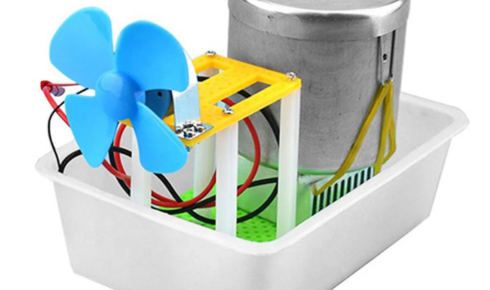
A science project is a structured way for students to explore scientific principles through practical experiments and model building. Projects can range from simple working models to advanced systems involving electronics and mechanics. For example, combining thermal devices with mechanical systems can create innovative demonstrations of energy conversion and motion control. Students often use sensors, motors, and structural components to build interactive models for exhibitions. Science projects help improve creativity, problem-solving skills, and logical thinking. They also encourage teamwork and research-based learning. By experimenting with different materials and components, students gain deeper understanding of physics, chemistry, and engineering principles in a practical environment that supports innovation and curiosity.
Science Fair Experiments for Students
Participating in science fair experiments allows students to showcase their creativity and understanding of scientific concepts. These experiments are designed to be interactive, educational, and visually appealing for judges and audiences. Common ideas include energy conversion models, mechanical motion demonstrations, and environmental science displays. Science fairs encourage students to think critically and apply classroom knowledge to real-life situations. They also help develop presentation skills and confidence in explaining technical concepts. Teachers often guide students in selecting safe and effective experiments that demonstrate clear scientific principles. By preparing and presenting these projects, students gain valuable experience in research, design, and communication, which supports their overall academic development and interest in STEM fields.
Conclusion
Modern science education focuses on practical learning through experiments and working models that combine physics, electronics, and mechanical systems. Devices like thermoelectric modules help explain energy conversion, while gear systems demonstrate mechanical motion and force transmission. Project-based learning encourages students to explore scientific principles in a creative and engaging way. Science fairs further enhance this experience by providing a platform to present innovative ideas and experimental results. Together, these learning methods build strong foundational knowledge and inspire future engineers and scientists. Exploring such concepts not only improves academic performance but also develops problem-solving abilities and innovation skills essential for future technological advancements.
