

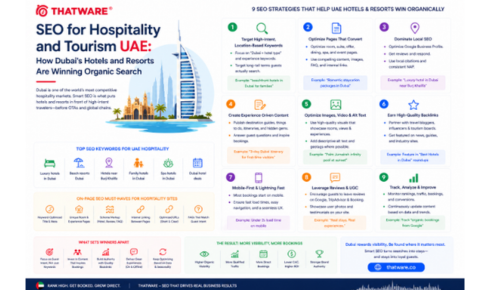

Dubai’s hospitality market is one of the most competitive in the world by almost any measure. The density of luxury hotels, the volume of international visitors, the sophistication of the travel booking market, and the presence of massive online travel agencies with effectively unlimited SEO budgets make organic search in this vertical genuinely challenging.
And yet there are Dubai hotels and resorts that are building meaningful direct booking traffic from organic search. Not competing head-to-head with Booking.com or Expedia for broad accommodation terms — that’s not a winnable fight for most properties. But capturing specific, high-intent traffic that converts to direct bookings at significantly better economics than OTA-mediated bookings.
Understanding how they’re doing it is the useful question.
The OTA Dominance Problem
The starting point for any honest discussion of hospitality SEO in Dubai is acknowledging the structural challenge: Booking.com, Expedia, Agoda, Hotels.com, and Airbnb collectively dominate the organic search results for most accommodation-related queries. Their domain authority, review volume, and content depth are effectively impossible to compete with head-to-head.
This creates a constraint on strategy that shapes everything else. Direct organic traffic for Dubai hotels comes from the queries where OTAs are relatively weaker — not broad accommodation searches, but specific property queries, experience-based searches, and long-tail intent searches that OTAs either don’t rank for or don’t serve well.
The brands that win organic search in Dubai hospitality have accepted this constraint and built their strategies around where they can actually win, rather than where they’d like to win.
The Brand Query Strategy
The highest-value organic traffic for most Dubai hotels is their own brand queries — searches for the hotel by name. Seems obvious, but the implications are often underappreciated.
When someone searches for a specific Dubai hotel by name, they’ve already made a strong preference decision. They’re researching or ready to book. The competition for this traffic isn’t OTAs — it’s the comparison of your direct website experience against the OTA listing that also appears for your brand name.
Winning this comparison — ensuring that the direct website appears prominently and attractively for brand queries, that the booking experience is competitive with OTA convenience, and that the direct booking incentives are clear — produces the highest-quality and most valuable organic traffic a hotel can capture.
Brand SEO for Dubai hotels includes: ensuring Google Knowledge Panel information is accurate and comprehensive, managing brand search result appearance through structured data and brand-focused content, and actively claiming and maintaining direct website presence in AI-generated responses when brand queries trigger them.
Experience and Long-Tail Search Opportunities
Beyond brand queries, the long-tail search opportunity for Dubai hospitality is substantial and underutilised.
Visitors to Dubai are often searching for specific experiences — “best hotel pool access Dubai,” “hotel near Dubai Marina with sea view,” “family resort Dubai with kids club,” “luxury staycation Dubai weekend.” These queries are specific enough that OTAs don’t rank well for them (their content is too generic), and a hotel that creates genuinely specific, experience-rich content around these searches can rank meaningfully.
Seo services uae that understand the Dubai hospitality search landscape will identify the specific long-tail intent queries where direct property content can realistically rank, and build the content architecture to capture those searches.
Wedding and events search represents another specific opportunity. Dubai is a major destination for destination weddings, corporate events, and large celebrations. This search category is different from accommodation search — it’s longer sales cycle, higher value per conversion, and often less dominated by OTAs. Hotels with strong meetings and events capability that build genuinely comprehensive events content often find that this becomes a significant direct enquiry channel from organic search.
Technical SEO for Hotel Websites
Dubai hotel websites have specific technical SEO challenges driven by their typical complexity.
Many luxury hotel websites are visually spectacular and technically problematic — heavy JavaScript frameworks, full-screen video backgrounds, parallax effects, and animation that creates both rendering and performance challenges for search engines and for mobile users.
Seo agency uae work on luxury hospitality clients often begins with a performance and renderability audit that identifies the specific technical changes required to allow the site’s content to be properly indexed without requiring the visual experience to be compromised. This involves working with the hotel’s design and development teams to implement rendering improvements that preserve the brand experience while resolving the technical barriers to organic performance.
Structured data for hotels — accommodationOffer schema, review schema, event schema for upcoming promotions — is frequently absent or incorrectly implemented on Dubai hotel websites, representing a straightforward improvement opportunity.
Multilingual implementation for the Arabic-language user segment is chronically underinvested. A significant proportion of Dubai accommodation searchers use Arabic search, and hotels that publish genuinely localised Arabic content — not machine-translated English content — capture an audience that most competitors ignore.
Building Authority Through Travel and Lifestyle Content
The link building opportunity for Dubai hospitality brands is in the travel, luxury lifestyle, and destination content ecosystem.
Travel blogs and travel media that cover Dubai regularly — and there are many, given Dubai’s prominence as a global destination — represent natural link opportunities for hotels that offer compelling stories, genuine access for content creators, and the kind of distinctive experience that generates genuine content.
This requires moving beyond the transactional approach of many hospitality PR programmes (securing placements in return for complimentary stays) toward genuine editorial relationships with travel media. The best hospitality link building produces content that the media publication genuinely wants to publish because it’s interesting to their readers — not content that exists primarily to benefit the hotel.
Dubai tourism authority partnerships, local food and lifestyle publications, and the significant influencer economy around Dubai luxury lifestyle all represent link and citation opportunities that, built over time, create the authority profile that supports broader organic visibility.
Measurement for Direct Booking Attribution
The ultimate metric for hospitality SEO is direct booking contribution — reservations attributable to organic search that came through the hotel’s own booking system rather than an OTA.
Connecting organic traffic to direct booking data requires clean attribution — ensuring that booking engine traffic from organic search sources is properly tracked, that OTA-mediated bookings influenced by organic brand search are accounted for, and that the revenue metric being used accurately reflects the commercial value of direct versus OTA bookings (which is typically higher because OTA commission is not paid).
This measurement connection — from organic channel activity to direct booking revenue — is what justifies continued SEO investment and guides prioritisation. Hotels that have built this measurement infrastructure can make SEO investment decisions based on direct commercial return rather than traffic proxies.
The Dubai hospitality market is fiercely competitive. But the direct booking opportunity through genuinely well-executed organic search is significant — and for hotels willing to invest in the right strategy, it builds an increasingly valuable channel as the compounding effects of authority and content quality develop over time.