


Every home has a quiet system working behind the walls—one that most people rarely think about until something goes wrong. Flip a switch, plug in a charger, start the coffee machine. Electricity flows silently through wires and circuits, making everyday life comfortable and convenient. Yet the moment a breaker trips or lights begin flickering, that invisible system suddenly becomes very real.
Homeowners often underestimate how much depends on reliable electrical infrastructure. A modern household might run dozens of devices at once—computers, kitchen appliances, HVAC systems, chargers, entertainment units. What once supported a few lights and a refrigerator now powers an entire digital lifestyle. That’s why understanding basic electrical care, and knowing when to call professionals for residential electrical services, can make a big difference in safety and comfort.
The Hidden Network Behind Your Walls
Electricity moves through homes in a carefully planned network of circuits. Each outlet, switch, and appliance connects to a larger system that ultimately leads back to the main panel. It’s a bit like a city road map—small streets leading into larger avenues and highways.
But unlike roads, this network is mostly invisible.
Older homes especially can carry electrical systems designed decades ago. Back then, households simply didn’t use the number of devices we do today. A television, a lamp, and maybe a radio—that was often enough. Fast forward to today and you’ve got routers, gaming consoles, microwaves, dishwashers, electric vehicle chargers, and more competing for power.
When that old system struggles to keep up, it shows signs. Breakers trip frequently. Lights dim when appliances start. Outlets feel warm. Sometimes there’s even a faint buzzing sound that shouldn’t be ignored.
Those little warning signals are your home’s way of saying, “Something needs attention.”
Why Good Wiring Still Matters
Let’s talk about the backbone of any electrical system: electrical wiring.
Wires are the pathways electricity travels through, and their condition determines how safely and efficiently power moves throughout the house. If wiring becomes damaged, outdated, or poorly installed, it can lead to bigger issues—sometimes dangerous ones.
For example, homes built before the 1980s might still contain aluminum wiring or older insulation types that degrade over time. While not automatically unsafe, these materials often require updates to meet modern safety expectations.
Even small DIY mistakes can create long-term problems. A loose connection inside a wall might not cause immediate trouble, but over time heat builds up. And heat, unfortunately, is one of electricity’s most common warning signs.
Professional electricians spend years learning how to design and install systems that balance load, minimize risk, and comply with safety standards. It’s not just about making the lights work—it’s about making them work safely for decades.
When the Electrical Panel Starts Showing Its Age
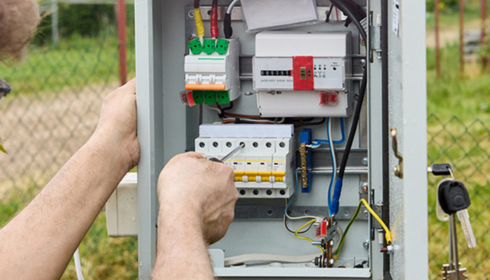
Now imagine your home’s electrical panel as the command center of the entire system.
Every circuit runs through it. Every appliance relies on it. When something draws too much power, the breaker trips to protect the wiring from overheating. That small interruption might feel annoying, but it’s actually doing its job.
The problem arises when older panels simply can’t handle modern demand.
Homes built many years ago might have 60-amp or 100-amp panels, which were sufficient at the time. Today, however, many households require 200 amps or more to support modern appliances, home offices, electric heating systems, and charging stations.
This is where panel upgrades come into play.
Upgrading the panel doesn’t just prevent nuisance breaker trips—it allows the entire electrical system to operate more efficiently. Newer panels distribute power more reliably and include modern safety features designed to detect faults before they become serious hazards.
Think of it like replacing an outdated fuse box with a modern circuit management system. The whole house simply runs better.
Small Signs That Shouldn’t Be Ignored
Electrical problems rarely appear overnight. Instead, they creep in slowly, like small cracks in a foundation.
A few things homeowners often notice include:
Lights dimming when large appliances turn on
Outlets that stop working randomly
Burning smells near switches or plugs
Frequent breaker trips
Extension cords becoming permanent solutions
Individually, these might seem minor. Together, they often signal that the system needs professional attention.
Ignoring these clues rarely makes them disappear. Electricity is one of those systems where prevention matters far more than repair after the fact.
Technology Is Changing the Way Homes Use Power
Another interesting shift in recent years is how technology has changed electrical demands.
Smart homes are becoming common. Lighting systems can be controlled from phones. Security cameras run 24/7. Charging stations for electric vehicles draw significant power overnight. Even kitchen appliances are becoming more advanced and energy-hungry.
What does this mean for homeowners?
Simply put, electrical systems need to evolve alongside technology. Installing new circuits, upgrading panels, and ensuring wiring meets modern load requirements isn’t just about safety anymore—it’s about functionality.
A home designed decades ago wasn’t built for today’s digital lifestyle. Updating its electrical backbone ensures everything runs smoothly without pushing the system beyond its limits.
The Quiet Value of Professional Electrical Work
There’s something reassuring about walking into a home where everything just works. Lights respond instantly. Appliances run without hesitation. Outlets are placed exactly where you need them.
Most people never stop to think about what makes that possible.
Behind that comfort lies thoughtful design, careful installation, and experienced professionals who understand how power flows through a building. Electrical work isn’t flashy—it happens behind drywall and inside panels—but its impact touches nearly every moment of daily life.
So when something feels off—a flicker, a trip, a strange smell—it’s worth paying attention.